

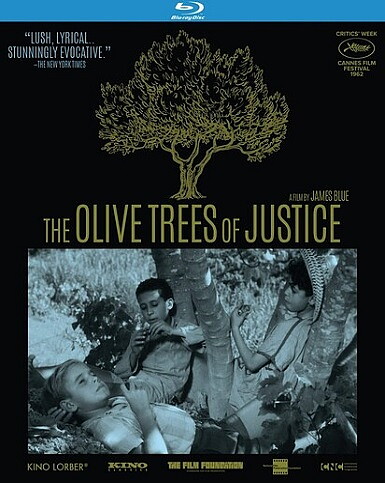

Olive Trees Of Justice (BLU-RAY)
369 SEK
OBS! BLU-RAY Region A (kräver en blu-ray spelare som kan spela region A (BLU-RAY från USA)
Regissör: James Blue
Skådespelare: Jean Pelegri, Marie Decaitre
Bild: Widescreen, Språk: Franska, Text: Engelska
Längd: 82 minuter, År: 1962, Bolag: Kino Lorber
Alternativ
Varianter som matchar dina val:
Pris
Ej tillgänglig
Pris
- Frakt 39 kr / Fri frakt på order över 1200 kr
- Beräknad leveranstid 3-5 vardagar
- 30000 BD/4K - Nyheter alla dagar
Beskrivning
Art.nr: BD405169
The first and only narrative feature by American documentarian James Blue (Oscar-nominated for A Few Notes On Our Food Problem), The Olive Trees Of Justice holds the dual distinctions of being the only French film to have been shot in Algeria during the Algerian War, and to have been the winner of the Prize of the Society of Film and Television Writers at the inaugural Critics' Week at the Cannes Film Festival in 1962.
Filmed in Algiers and the surrounding countryside during the late stages of the Algerian War, under the pretext that it was a documentary about the wine industry, the film depicts the Algerian struggle for independence from the French by concentrating on a young “pied-noir” (Frenchman of Algerian descent) who returns to Algiers to visit his dying father. His memories of boyhood on his father's farm are told in flashbacks with a lush serenity that contrasts to the teeming, tank-filled streets of contemporary Algiers.
Giving the film a neorealist tone by shooting in a documentary style and enrolling a cast that consisted largely of non-professional actors, including author Jean Pelegri who wrote the autobiographical novel from which the film is based, Blue tells a powerful story of common people living and struggling in their daily lives, while providing a valuable testimony to the complexity of the Algerian situation in that time period.